
Replacing Bosch Security Escort? Why Reusing Existing Hardware May Be the Better Strategy
When organizations begin searching for a Bosch Security Escort replacement, they usually expect one answer: remove the existing system and install an entirely new one.
That has become the standard message since Bosch Security Escort reached end of life. Many suppliers now position their products as the best replacement system.
However, a complete replacement is not always necessary.
In many correctional facilities, behavioral health hospitals, government buildings, and other secure environments, much of the original Bosch Security Escort infrastructure continues to operate reliably. Receivers, transponders, cabling, antennas, and associated field hardware may still provide years of service.
The real problem is often the software (Bosch Security Escort only runs on unsupported and end-of-life operating systems, creating an additional blocker to using the system).
Modernizing the software layer while retaining proven infrastructure can reduce project cost, shorten deployment time, and avoid unnecessary disruption to critical safety systems.
Bosch Security Escort has reached end of life
Bosch Security Escort is no longer actively developed or supported.
For many organizations this creates several challenges:
- Software depends on aging and unsupported operating systems and hardware.
- Replacement parts become harder to source.
- Cybersecurity and IT compliance become increasingly difficult.
- Vendor support becomes limited or unavailable.
- Integration with modern security and operational systems is restricted.
These issues are real and require action. However, end of life does not automatically mean that every component installed throughout the facility has reached the end of its useful life.
Why end of life does not mean the full installation has stopped working
Many Security Escort installations have operated successfully for years.
The installed infrastructure was designed for long-term operation and often includes extensive networks of receivers, antennas, communication wiring, transponders, and supporting equipment distributed throughout a facility.
Replacing that infrastructure simply because the software has reached end of life may not always represent the best technical or financial decision.
Before planning a complete replacement, organizations should first determine:
- Which hardware continues to function correctly.
- Which components are unsupported but still operational.
- Which elements genuinely require replacement.
- Whether existing infrastructure can support future expansion.
Every site is different. Some facilities may require modernization or there may be a shortfall in certain field hardware such as transmitters, while others can retain a significant proportion of their installed equipment that is sufficient for their needs.
The cost and operational impact of rip and replace
Replacing an entire real-time location system involves far more than purchasing new hardware.
A complete replacement project may require:
- Removing receivers throughout the building.
- Installing new infrastructure.
- Replacing transponders and wearable devices.
- Running new cabling.
- Testing every protected area.
- Recommissioning the complete system.
For secure facilities, these activities create operational challenges. Correctional facilities cannot simply close housing units while new infrastructure is installed. Behavioral health hospitals cannot suspend staff duress protection while contractors replace equipment. Government buildings must continue operating throughout the project.
Every area taken offline introduces planning complexity, operational risk, and additional cost. Reducing disruption is often as valuable as reducing capital expenditure.
Which parts of an existing installation may be reusable
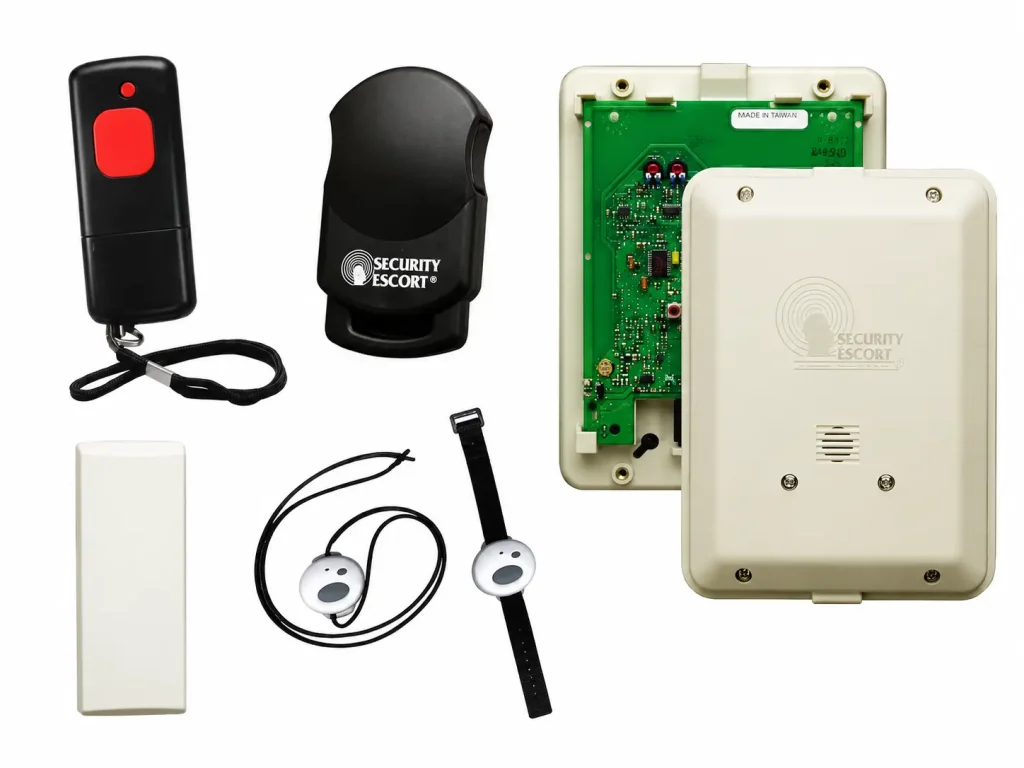
Many Bosch Security Escort installations contain infrastructure that may remain suitable for continued operation. Depending on the condition of the installation, reusable components may include:
- Fixed receivers
- Transponders
- Installed cabling
- Power infrastructure
- Communications networks
- Existing mounting locations
A technical assessment determines which components remain suitable. Rather than replacing everything, organizations can focus investment where it delivers the greatest value.
This approach allows existing infrastructure to continue generating value while avoiding unnecessary replacement costs.
Replacing the unsupported software layer
In many cases, the software has become the weakest part of the installation. Legacy operating systems create security concerns. Older databases become difficult to maintain. Modern reporting, visualization, and integration capabilities may be unavailable.
Actall addresses this challenge with ATLAS Escort, which replaces the unsupported software layer while continuing to utilize compatible Bosch Security Escort field hardware where appropriate.
Instead of forcing organizations into a complete rip-and-replace project, the system modernizes the location platform that sits above the installed infrastructure.
This provides access to:
- Modern software architecture.
- Ongoing product support.
- Current operating system compatibility.
- Improved system management.
- Integration with newer operational platforms.
The result is a supported software environment without automatically discarding working field equipment.
Extracting and routing location data from Bosch hardware
Location data has value beyond staff duress. Modern organizations increasingly want location information to support wider operational workflows.
ATLAS HubSens acts as the location intelligence engine that receives data from compatible Bosch Security Escort infrastructure and makes that information available to other applications.
Depending on site requirements, location events can be routed to:
- Security management platforms
- Alarm management systems
- Building management systems
- Command and control software
- Third-party operational applications
This allows organizations to continue benefiting from existing infrastructure while making location information available across multiple systems.
Instead of remaining locked inside legacy software, location data becomes part of a broader operational ecosystem.
Extending coverage with Actall ATLAS products
Modernization does not have to stop with existing Bosch infrastructure.
Many organizations eventually want to extend location coverage into additional buildings, expand staff safety capabilities, or introduce new tracking technologies. The ATLAS product family provides a path for future expansion. With it, organizations can:
- Extend coverage into new areas.
- Add modern staff duress capabilities.
- Introduce additional location technologies where appropriate.
- Expand without replacing the original installation all at once.
This phased approach allows modernization to align with operational priorities and available budgets rather than requiring a single large capital project.
When full replacement may still be justified
Not every Bosch Security Escort installation should be preserved. A complete replacement may be the better option where:
- Field hardware has reached the end of its operational life.
- Existing infrastructure has suffered significant damage.
- Coverage requirements have fundamentally changed.
- Building renovations require new layouts.
- Long-term maintenance costs outweigh reuse benefits.
Each site should be evaluated individually. The objective being not simply to preserve old equipment at any cost. The objective is to determine which solution delivers the best operational and financial outcome. Sometimes that will be modernizationm sometimes it will be replacement.
The role of a site assessment
No two Security Escort installations are identical.
Years of modifications, extensions, maintenance, and building changes mean every site requires an individual assessment before decisions are made.
A structured technical review can identify:
- The condition of installed hardware.
- Components suitable for continued use.
- Unsupported elements requiring replacement.
- Opportunities to modernize software.
- Options for phased migration.
- Opportunities to expand future RTLS capability.
This evidence-based approach helps organizations avoid replacing infrastructure that continues to provide value. When conducting a review of Bosch Security Escort replacement or modernization, best to work with experts familiar with both the existing technology and the other options available.
Modernize where it makes sense
Searching for a Bosch Security Escort alternative does not automatically mean replacing every receiver, transponder, and cable throughout your facility.
Where existing Bosch infrastructure remains operational, organizations may be able to retain significant portions of their installed system while replacing the unsupported software layer with a modern, fully supported platform.
For correctional facilities, behavioral health hospitals, and other secure environments, this approach can reduce disruption, preserve previous investment, and provide a practical path toward future modernization.
Book a no-obligation Bosch Security Escort System Review
If your organization is evaluating a Bosch Security Escort replacement, Actall can assess your existing installation and identify which components may be reused.
A Bosch Security Escort System Review includes:
- Assessment of existing Bosch infrastructure.
- Identification of reusable hardware.
- Review of software modernization options.
- Recommendations for phased migration where appropriate.
- Guidance on extending coverage with the ATLAS platform.
Before committing to a complete replacement, understand what you already have—and what you may be able to keep.